Why Persian Rugs Add Lasting Beauty to Any Home
Hand-knotted Persian rugs combine centuries of craftsmanship with natural materials and timeless artistry. Whether you’re furnishing your first home or seeking a statement piece, authentic Persian rugs bring warmth, character, and durability that machine-made rugs simply can’t replicate.
Quick Guide to Persian Rugs by Budget:

- Under $500: Gabbeh rugs with bold tribal motifs
- $500–$1,500: Heriz and Kashan rugs with classic medallions
- $1,500+: Silk Qum, antique Tabriz, and large-format Bijar rugs
Each piece is unique, often made with natural wool or silk, asymmetrical (Persian) knots, and natural dyes. Many Persian rugs appreciate in value over time and are considered both functional décor and cultural artifacts. In fact, traditional Persian carpet weaving has been recognized by UNESCO as part of the Intangible Cultural Heritage of Humanity.
Why Persian Rugs Are Smart, Stylish Investments
Unlike mass-produced rugs that wear out quickly, Persian rugs often become more beautiful with age. The hand-knotting process—ranging from 16 to over 800 knots per square inch—creates durable rugs that can last generations.
What sets Persian rugs apart?
- Natural dyes create subtle color shifts, known as abrash
- Hand-knotting provides texture, durability, and one-of-a-kind design
- Cultural heritage enhances its long-term value and story
These heirloom pieces hold up under everyday use, and many families pass them down from one generation to the next. For a closer look at how Persian rugs are made, visit our Hand-Knotted Rugs collection.
A Glimpse Into Persian Rug History
Persian rug weaving dates back over 2,500 years, with the famed Pazyryk carpet (circa 400 BC) as the earliest known surviving example. The Safavid dynasty (1501–1736) marked a golden era of Persian carpet production, where design and artistry flourished under royal patronage.
Each region in Iran developed its own rug style, often inspired by local culture, geography, and materials. The result is a diverse and rich heritage that continues to influence rug-making around the world.
Benefits of Choosing Persian Rugs
- Long-lasting quality: Handmade construction and natural materials ensure decades of use.
- Allergy-friendly: Natural wool resists dust mites and VOCs found in synthetic rugs.
- Sustainable: Crafted from renewable resources with low environmental impact.
- Resale value: Authentic rugs often retain or increase their value over time.
Looking for a rug that will last a lifetime? Browse our Traditional Rugs collection for authentic options.
How to Pick the Perfect Persian Rug

Start by measuring your space accurately and considering furniture placement. A rug should anchor your room, not feel like an afterthought. Match your rug’s color and design to your home’s palette or use it as a foundation for a new look.
Key factors:
- Knot count (KPSI): 80–120 is excellent for daily use; 200+ is museum-quality
- Material: Wool is durable and low-maintenance, while silk offers luxury and detail
- Authenticity: Buy from trusted dealers and request a certificate of authenticity
Rug Placement Tips
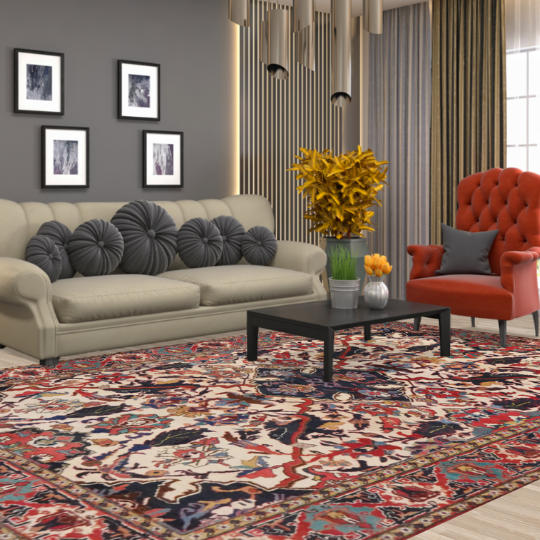
- Living rooms: Place front legs of furniture on the rug, or opt for full coverage.
- Dining rooms: Rug should extend 24″ beyond the table on all sides.
- Runners: Leave 6–8″ of visible floor on each side and avoid awkward placement.
Even layering a small Persian rug over a neutral base can add interest and charm.
How to Spot Authentic Persian Rugs
- Knot structure: Hand-knotted rugs have slight irregularities on the back.
- Abrash: Subtle color variation is a sign of natural dyeing and authenticity.
- Fringe: Part of the foundation, not sewn on separately.
- Materials: Wool and silk burn like hair, not plastic.
Not sure? Seek a professional appraisal or shop directly from reputable sources like Rug Source.
Best Persian Rugs for Your Budget
Under $500
- Gabbeh Rugs: Bold tribal motifs, thick pile, and joyful simplicity.
- Small Heriz Rugs: Durable, geometric, and iconic Persian medallion designs.
- Persian Runners: Great for hallways and kitchens. Styles like Malayer and Hamadan are both affordable and authentic.
Explore budget-friendly options in our Gabbeh Rugs collection.
$500–$1,500
- Kashan Rugs: Rich colors, silk highlights, and traditional floral patterns.
- Balouch Rugs: Darker, tribal styles with deep reds and blues.
- Farahan Rugs: All-over Herati patterns are ideal for elegant spaces.
You’ll also find mid-range options in our Heriz Rugs collection.
$1,500+
- Silk Qum Rugs: High knot counts, intricate detail, and pure silk luxury.
- Antique Tabriz Rugs: Over 100 years old, with complex designs and historical value.
- Oversized Bijar Rugs: Dense “iron rugs” built for longevity.
For investment-worthy pieces, browse our Antique Rugs collection.
Caring for Persian Rugs
Preserve your rug’s beauty with proper care:
- Vacuum regularly (with the pile) and flip occasionally to remove embedded dust.
- Rotate every 3–6 months to prevent uneven wear.
- Blot spills quickly—never rub. Use clean cloths and avoid harsh cleaners.
- Professional cleaning every 3–5 years helps restore oils and vibrancy.
- Use a rug pad to prevent slipping and prolong the life of your rug.
- Watch for moths—regular cleaning helps prevent damage.
With consistent care, your rug will age gracefully and become even more valuable.
FAQs
Do Persian rugs appreciate in value?
Yes—many hand-knotted Persian rugs do appreciate, especially those that are antique, rare, or made by master weavers. Since U.S. sanctions limit new imports, existing pieces often increase in value due to scarcity.
How often should I clean it professionally?
Every 3–5 years for standard use, or 2–3 years for high-traffic areas. Choose a rug specialist, not a standard carpet cleaner, to protect natural dyes and wool fibers.
Are machine-made Persian-style rugs worth it?
They’re useful in rentals or short-term setups but don’t offer the same longevity or value as handmade rugs. Over time, a hand-knotted rug may cost less annually than replacing cheaper machine-made versions.
Make It Count
Authentic Persian rugs aren’t just home décor—they’re pieces of living art. With proper care and placement, a hand-knotted rug will transform your home and stay beautiful for generations. Whether you’re drawn to the modern charm of a Gabbeh or the intricate elegance of a Qum, you’ll find timeless value in every knot.
Shop the full Persian Rugs collection today and find the perfect piece for your space.