Understanding What Defines an Authentic Oushak Rug
What is an authentic Oushak rug? This is a question many homeowners ask when searching for that perfect blend of timeless beauty and craftsmanship. An authentic Oushak rug is a hand-knotted Turkish carpet originating from the city of Uşak in western Anatolia. These celebrated rugs are characterized by several key features:
- Hand-Knotted Construction: Woven with the symmetrical Ghiordes (Turkish) knot see our collection of hand-knotted rugs.
- Premium Materials: A high-quality wool pile on a durable cotton foundation.
- Natural Dyes: A palette of muted, warm colors derived from vegetable sources explores our 100% vegetable‑dye Oushaks.
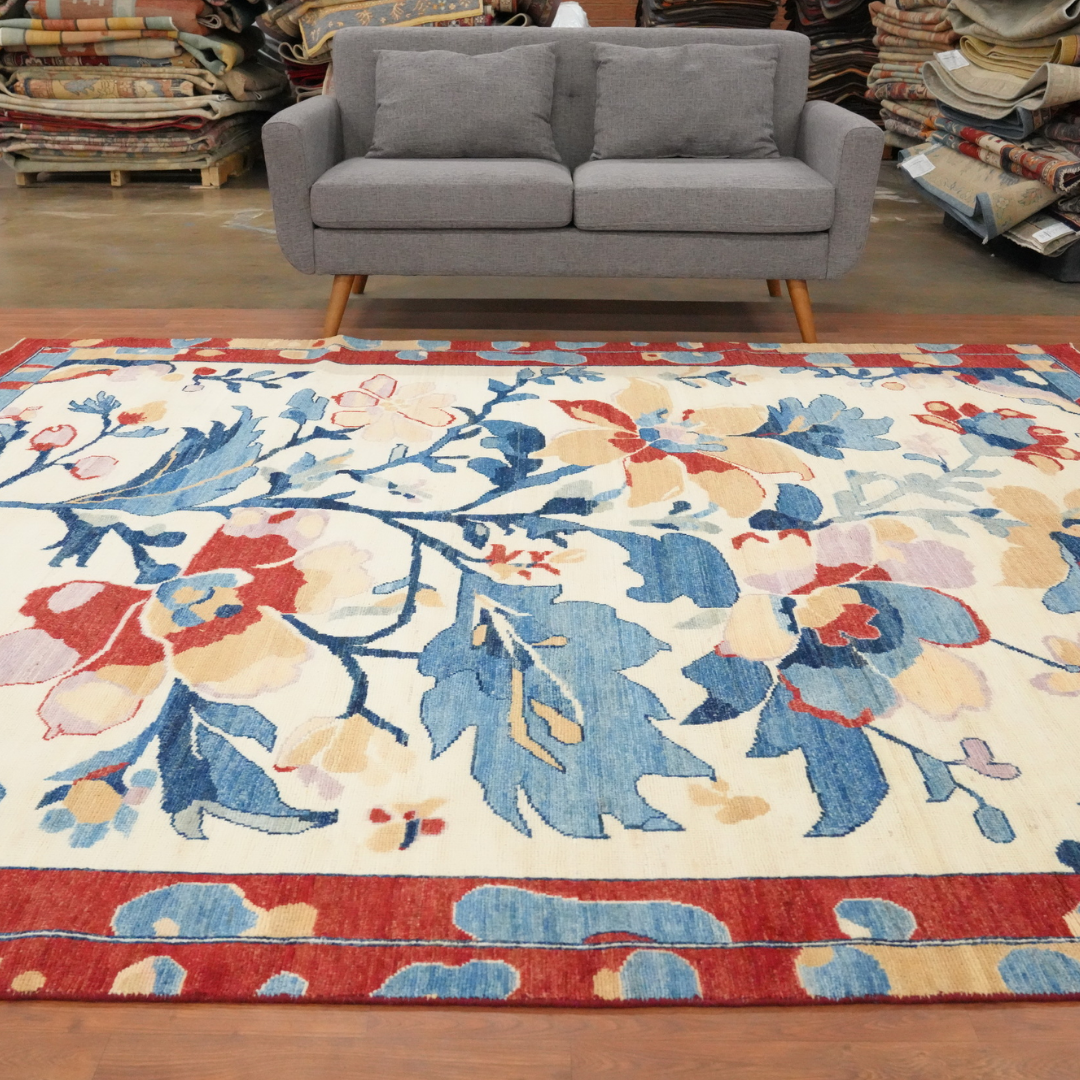
- Distinctive Motifs: Large-scale, angular floral patterns, medallions, and generous open space.
- Turkish Origin: A weaving tradition dating back to the 15th-century Ottoman Empire; browse related Turkish rugs.
Oushak rugs stand apart from other Oriental carpets with their soft color palettes, lower pile height, and a unique fusion of Persian design influence with Turkish weaving traditions. But in a market flooded with machine-made imitations, how can you be sure you’re getting the real deal? For a concise historical primer, see the encyclopedia entry on Ushak carpet.
I’m Mina Daryoushfar, owner of Rug Source in Charlotte, NC. Since 2002, I’ve been immersed in fine carpets, and I have a deep understanding of what makes an Oushak rug authentic. Through years of sourcing and studying these pieces, I’ve learned to distinguish genuine artistry from clever copies.
This guide will walk you through everything you need to know to identify an authentic Oushak rug with confidence. We’ll explore its rich history, decode its materials and weaving techniques, and give you practical tips for spotting the real thing whether you’re shopping online, at an estate sale, or in our showroom.
The Soul of the Weave: Historical Origins and Cultural Significance
To truly understand what an authentic Oushak rug is, we must travel back to its origins. The journey begins in Uşak (often spelled Oushak), a city in western Anatolia, Turkey, with a weaving history that dates to the 15th century. During the height of the Ottoman Empire, Uşak grew from a center for nomadic textiles into a major production hub for some of the world’s most sought-after carpets.
Initially, these rugs were practical items for Turkish nomads, serving as insulation, bedding, and decoration. By the 17th century, however, they had become prized possessions for wealthy European families, a symbol of refined taste and status. European Renaissance artists like Lorenzo Lotto and Hans Holbein the Younger were so captivated by these carpets that they featured them prominently in their paintings. In fact, certain designs are now named “Holbein” and “Lotto” carpets, and art historians use these depictions to help date European paintings, as frequently noted in museum scholarship and overviews such as the Holbein carpet and the Lotto carpet on Wikipedia.
What makes Oushak rugs culturally unique is their blend of influences. Unlike the purely geometric designs of other Turkish tribal rugs, Oushaks display a distinct Persian design influence. Weavers in Uşak absorbed artistic ideas from their eastern neighbors, merging flowing, sophisticated motifs with their own angular Turkish weaving traditions. This resulted in the signature Oushak style: large-scale floral patterns and medallions with generous open space, allowing each design element to breathe.
This evolution from nomadic necessity to royal treasure was cemented under rulers like Suleiman the Magnificent, who lifted Turkish carpets to new heights of prestige. Oushak rugs became coveted treasures in palaces and grand mosques, with hundreds of antique examples found layered on the floors of Istanbul’s most sacred spaces. The iconic Star and Medallion motifs emerged during this period, carrying deep symbolism of celestial bodies, unity, and divine creation.
When you bring an authentic Oushak rug into your home whether in Charlotte, NC, Raleigh, or anywhere in the United States you’re not just buying a floor covering. You are connecting your space to this rich history, a legacy of cultural exchange, artistic evolution, and centuries of tradition preserved in every hand-tied knot.
The Anatomy of Authenticity: Materials and Weaving Techniques
Beyond the beautiful patterns, the true story of what an authentic Oushak rug is lies in its materials and construction. The elements that separate a genuine Oushak from a machine-made lookalike are the fibers themselves and the ancient techniques used to weave them.
Authentic Oushak rugs are crafted from high-quality Anatolian wool, known for its natural softness and luminosity. This wool gives the pile a subtle shimmer and a silky, almost buttery texture. This luxurious wool pile is knotted onto a sturdy cotton foundation, which provides the structural integrity needed for the rug to last for generations. While most Oushaks use this wool-on-cotton combination, rare ceremonial pieces might incorporate silk or metallic threads.
The colors are another hallmark of authenticity. The muted, warm Oushak palette comes from natural vegetable dyes derived from plants and minerals. Madder root yields terracotta reds, indigo creates smoky blues, and saffron produces warm golden yellows. Unlike synthetic dyes, these natural colorants age gracefully, developing a rich patina over time. A key feature of this process is subtle color variations and striations within the same hue. Far from being a flaw, a brash is a sign of a handmade, naturally dyed carpet, adding character and depth that machines cannot replicate.
Each hand-knotted rug is a labor of love, woven on a vertical loom by artisans who have inherited their skills. After tying a row of knots, the weaver uses a Punja comb to pack them down tightly, creating a dense and durable textile. For additional context on the traditional craft, the general history of carpet weaving provides useful background.
Understanding the Ghiordes Knot and Knot Density (KPSI)
The heart of an authentic Oushak is the Ghiordes knot, also known as the Turkish knot. This symmetrical knot wraps around two warp threads, creating an incredibly strong and resilient pile. While Persian weavers often use the asymmetrical Senneh knot, the Ghiordes knot is a cornerstone of Turkish weaving, giving Oushak rugs their remarkable durability despite their soft feel.
This brings us to knot density, or Knots Per Square Inch (KPSI). Oushak rugs typically have a lower to medium knot count, usually ranging from 80 to 150 KPSI. This is often misunderstood as a sign of lower quality, but it is actually a defining characteristic of the Oushak style. This coarser weave is intentional, as it allows for the large-scale, open patterns that give these rugs their grand, artistic look. A higher knot count would make these sweeping, graceful motifs impossible to achieve.
The lower KPSI also contributes to the rug’s wonderfully soft and pliable texture, giving it a cushioned feel underfoot. Quality is not just about the number of knots, but how those knots are used to achieve a specific artistic and textural effect. When shopping, focus on the quality of the wool and the execution of the weave rather than just the KPSI number.
A Visual Language: Decoding Oushak Designs, Patterns, and Colors
The visual language of what is an authentic Oushak rug is one of serenity, space, and timeless elegance. Unlike the dense, intricate patterns of many other Oriental rugs, Oushaks accept generous open space, allowing their designs to breathe.
The patterns are defined by large-scale motifs that command attention without overwhelming the eye. You’ll find sweeping angular floral patterns, meandering vine motifs, and bold central medallions that anchor the composition. This balance of confident design and a calm aesthetic is what makes Oushaks so versatile in both traditional and modern interiors. Some of the most iconic designs include:
- Medallion Oushak: Features a grand central medallion, often echoed by complementary corner spandrels. The medallion traditionally symbolizes infinity or the cosmos.
- Starry Oushak: Showcases octagonal star motifs arranged in a rhythmic pattern across the field, symbolizing birth and renewal.
- Bird Oushak: A whimsical design where abstract leaf arrangements create the illusion of birds in flight, revealing the weaver’s playful artistry.
- Holbein and Lotto Designs: Historical styles with distinctive geometric patterns, named after the Renaissance painters who famously depicted them.
You can see the full range of these beautiful patterns in our Oushak rug collection, where traditional designs are perfectly suited for contemporary homes. For a broader historical context on design development across regions, Britannica’s overview of rugs and carpets is a helpful reference.
The Signature Color Palette of an Authentic Oushak
Perhaps the most beloved characteristic of an Oushak rug is its color palette. While Persian rugs often feature rich jewel tones, Oushaks whisper with muted, sophisticated hues that feel both timeless and current. The palette is built on warm foundations of dark ivory or light gold, accented with colors like:
- Smokey saffron and brilliant apricot
- Deep, dusky blues
- Earthy terracotta and cinnamon
- Soft, herbaceous greens
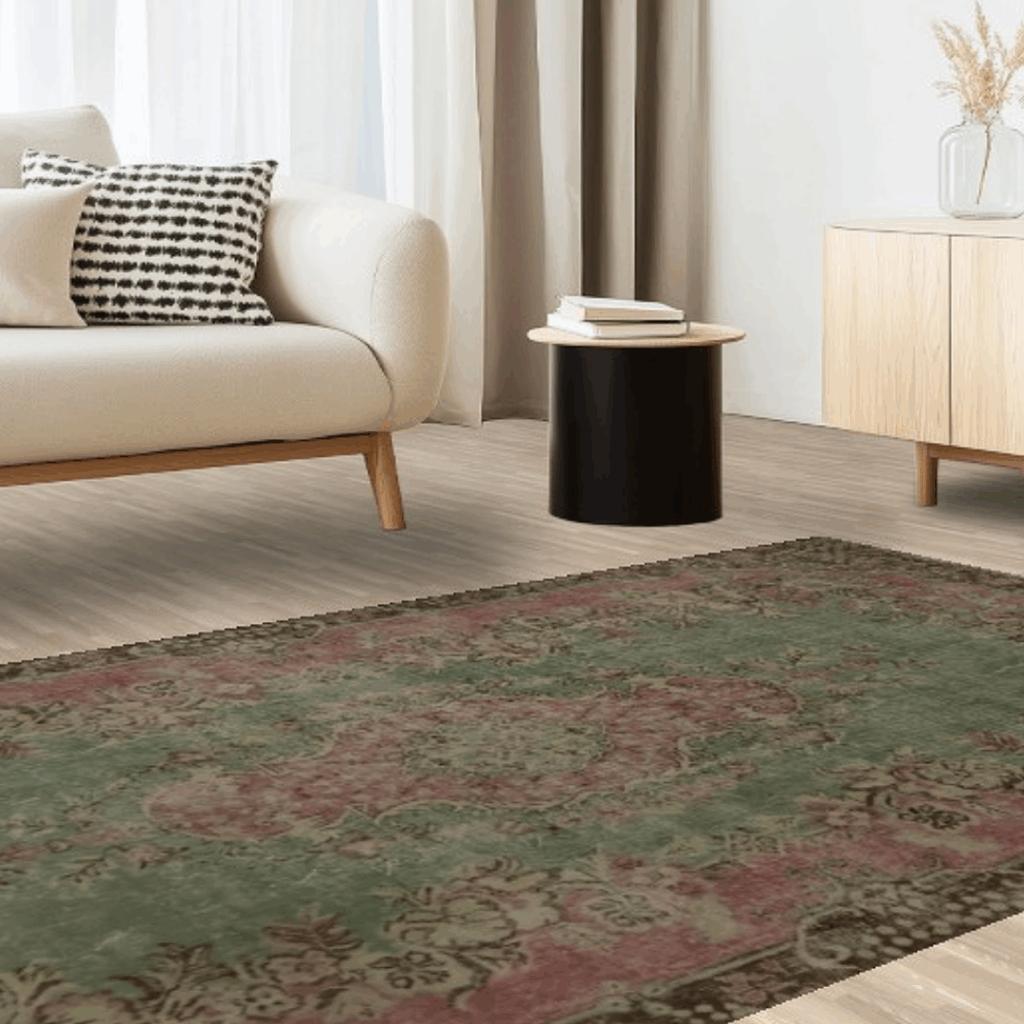
These colors are achieved with natural vegetable dyes, which produce the beautiful, subtle variations known as abrash. These gentle shifts in tone are a hallmark of authenticity and add a depth that synthetic dyes cannot match. Browse our vegetable‑dye Oushaks to see the palette in action. The colors will mellow and soften gracefully over the years, developing a beautiful patina. For additional historical insights and visual examples, the V&A Museum’s article on Turkish carpets offers a concise overview of Ottoman-era styles and palettes.
This versatile color palette is why interior designers consistently choose Oushaks. The soft hues complement both traditional and modern furniture, adding warmth and elegance without dominating a room. Whether in a rustic Charlotte, NC, farmhouse or a sleek city loft, an Oushak rug provides a perfect foundation.
What is an Authentic Oushak Rug and How Does It Compare?
Understanding what an authentic Oushak rug is becomes clearer when you compare it to other famous Oriental carpets, particularly those from Persia and other regions of Turkey. Oushaks occupy a unique space, blending cultural influences to create something truly distinct.
Here’s a quick comparison:
- Oushak Rugs (Turkey):
- Knot: Symmetrical Ghiordes knot.
- Knot Density: Low to medium (under 150 KPSI).
- Motifs: Large-scale, angular florals and medallions with ample open space.
- Colors: Muted, soft earth tones and pastels (ivory, gold, apricot, soft blue).
- Texture: Soft, pliable, and luminous pile.
- Persian Rugs (Iran):
- Knot: Typically asymmetrical Senneh knot.
- Knot Density: High to very high (200-500+ KPSI).
- Motifs: Intricate, curvilinear florals, detailed medallions, and narrative scenes.
- Colors: Rich, vibrant jewel tones (ruby red, sapphire blue, emerald green).
- Texture: Dense, often velvety pile that can feel stiffer.
- Other Turkish Rugs (e.g., Tribal/Kilim):
- Knot: Ghiordes knot for pile rugs; flatweave for Kilims.
- Knot Density: Varies, but often in the low to medium range.
- Motifs: Heavily geometric, abstract, and symbolic tribal patterns.
- Colors: Often bright, bold primary colors.
- Texture: Varies from soft pile to no-pile flatweaves (Kilims).
The key takeaway is that Oushaks represent a cultural fusion, combining Turkish weaving techniques with Persian-influenced designs. This makes them less intricate than Persian rugs but more floral and spacious than other Turkish tribal styles. You can explore our Oushak rug collection to see these unique characteristics firsthand.
How to Identify a Genuine Oushak vs. a Machine-Made Replica
In today’s market, telling a hand-knotted treasure from a machine-made copy is essential. Here are the key indicators of authenticity:
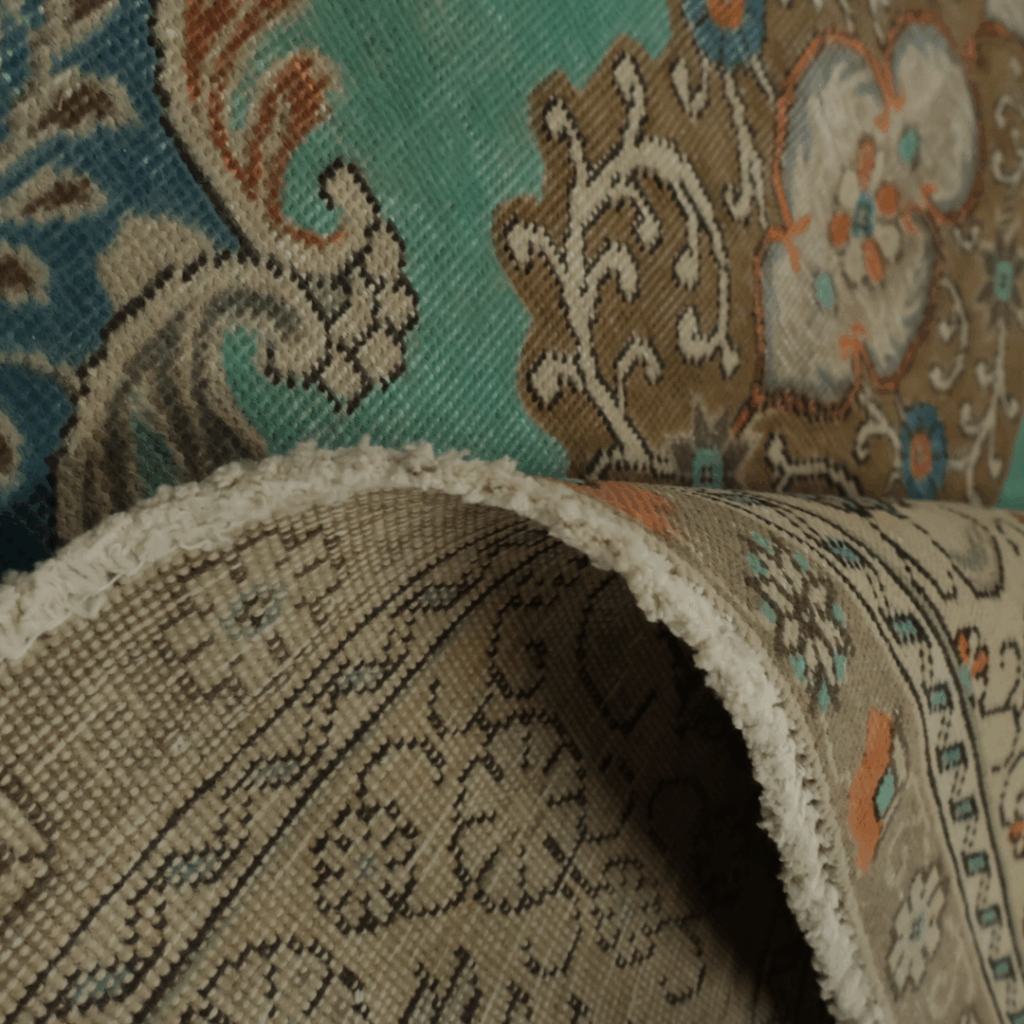
- Examine the Back: Flip the rug over. A genuine hand-knotted rug will show individual knots that are slightly irregular, reflecting the human touch. A machine-made rug will have perfectly uniform rows, often with a grid-like backing.
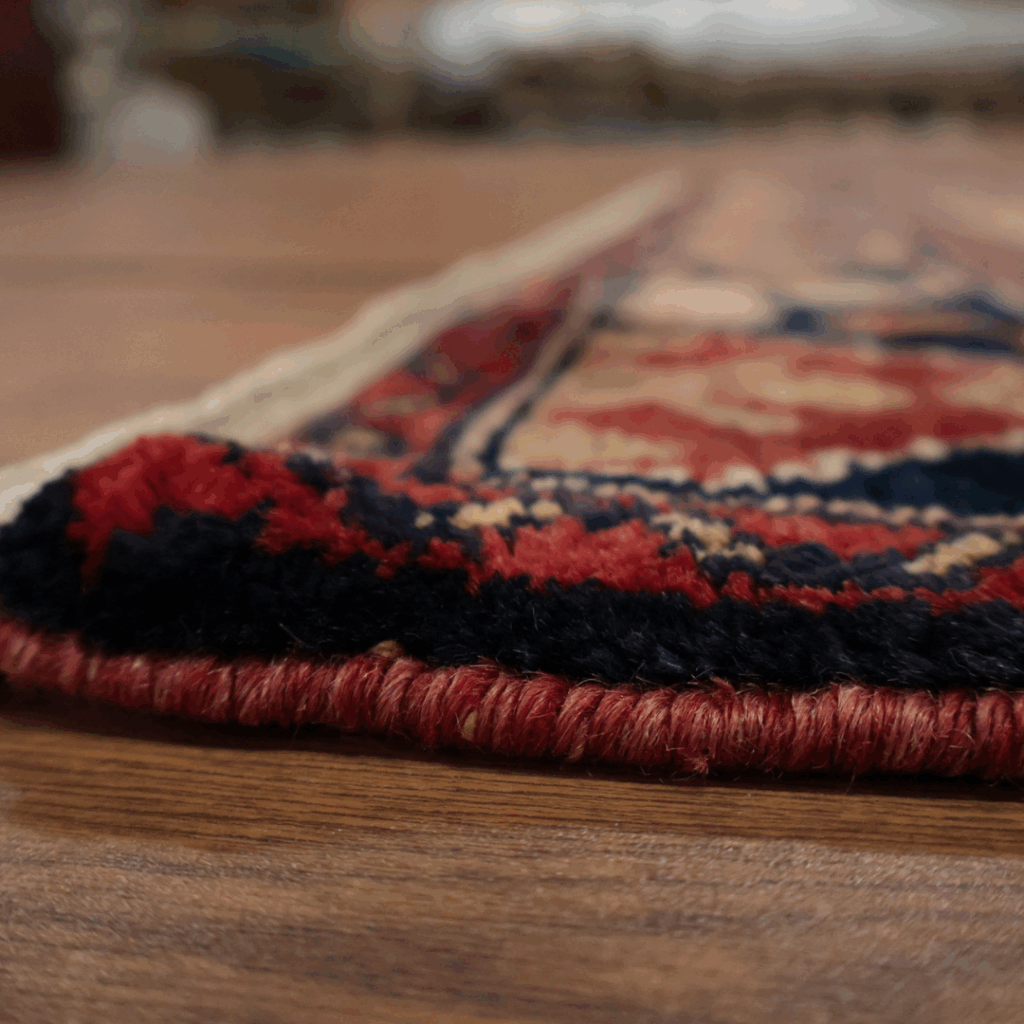
- Check the Fringe: On an authentic rug, the fringe is an integral part of its structure it’s the end of the warp threads. On a machine-made rug, the fringe is almost always sewn or glued on as a separate piece.
- Feel the Material: Authentic Oushak wool is soft, rich, and has a natural lanolin feel. Synthetic fibers used in replicas often feel stiff, plasticky, or overly uniform.
- Look for Abrash: Search for subtle color variations (abrash) within a single color field. This is a sign of natural dyes and hand-spinning, which are absent in machine-made rugs with uniform synthetic dyes.
- Assess the Design: Handmade designs have minor imperfections and slight asymmetries. A pattern that is perfectly symmetrical and flawless is a telltale sign of machine production.
Knowing these signs will empower you to shop with confidence. As noted by design authorities like Architectural Digest, the unique character of a handmade rug is what gives it soul and lasting appeal. If you’re local to Charlotte, NC, you can also visit our showroom to compare examples side-by-side with expert guidance.
Preserving Your Investment: Care, Maintenance, and Value
An authentic Oushak rug is an investment in art and history. Proper care is crucial to preserve its beauty, extend its life, and maintain its value for generations to come. Fortunately, caring for your Oushak is straightforward with a consistent, gentle approach.
Best Practices for Oushak Rug Care
Follow these tips to keep your rug in pristine condition:
- Vacuum Gently: Vacuum regularly (1-2 times a week) using a suction-only setting. Never use a beater bar, as its rotating bristles can damage the wool pile.
- Rotate Your Rug: Turn your rug 180 degrees every 6-12 months to ensure even wear and prevent fading from sunlight.
- Use a Quality Rug Pad: A good pad prevents slipping, provides cushioning, and protects the rug’s foundation from abrasive dirt on the floor.
- Protect from Furniture: Use furniture coasters under the legs of heavy pieces to prevent permanent dents in the pile. Shift furniture slightly every few months.
- Limit Direct Sunlight: Prolonged exposure to direct sunlight will fade the natural dyes. Use UV-filtering window treatments or sheer curtains in sunny rooms.
- Address Spills Immediately: Blot spills with a clean, white cloth, working from the outside in. Never rub. For most stains, a little cold water and mild soap will suffice, but always test on a small corner first.
- Seek Professional Cleaning: Have your rug professionally cleaned every 2-3 years by a specialist who understands hand-knotted Oriental rugs. Avoid harsh chemical treatments or steam cleaning.
For additional conservation guidance, museum resources like the Canadian Conservation Institute’s note on Care of Textiles outline best practices that also apply to wool pile rugs and other household textiles.
Understanding the Value of an Authentic Oushak Rug
The value of an authentic Oushak rug is determined by a combination of factors:
- Age: Antique rugs (over 100 years old) are the most valuable, followed by semi-antique and vintage rugs. Age often brings rarity and historical significance.
- Condition: A rug in excellent condition with minimal wear, intact pile, and original fringes will always command a premium. Some graceful wear is expected in antique pieces, but significant damage reduces value.
- Craftsmanship & Materials: The quality of the wool, the use of natural dyes, and the skill of the weaver are paramount. A well-executed weave is more valuable than a loosely woven one.
- Size & Design: Large, room-sized antique Oushaks are rare and highly prized. A rug with a particularly harmonious color palette or a striking, desirable design will also be more valuable.
While modern Oushaks are valuable contemporary pieces, antique Oushaks are often viewed as art investments that can appreciate over time. Consulting with a reputable dealer like Rug Source in Charlotte, NC, can help you understand the specific value of a piece and how to care for it in our North Carolina climate.
Frequently Asked Questions about Authentic Oushak Rugs
Over the years at Rug Source, we’ve helped countless customers in Charlotte, NC, and beyond steer Oushak rugs. Here are answers to some of the most common questions we hear.
Are Oushak rugs suitable for high-traffic areas?
It depends. An authentic Oushak’s soft wool pile and lower knot density make it incredibly luxurious underfoot, but this also means it’s not ideal for the busiest areas of a home, like main entryways or hallways. However, they perform beautifully in low to moderate traffic spaces such as living rooms, dining rooms, and bedrooms. With a quality rug pad and regular maintenance (gentle vacuuming and rotation), your Oushak will withstand daily family life for decades.
Why are authentic Oushak rugs so expensive?
The price of an authentic Oushak reflects the immense time, skill, and quality materials that go into its creation. You are investing in a piece of handmade art. Key factors include:
- The Hand-Knotting Process: A single large rug can contain hundreds of thousands of individual knots, each tied by hand over several months or even years.
- Premium Materials: They are made with high-quality, often hand-spun wool and natural vegetable dyes, which are far more costly and labor-intensive to produce than synthetic alternatives.
- Artisanal Skill: The weaving techniques are passed down through generations, representing a deep cultural heritage.
- Rarity and History: For antique pieces, you are also paying for their historical significance and irreplaceability. They are artifacts that tend to appreciate in value over time.
Can modern Oushak rugs be authentic?
Absolutely. “Authentic” refers to the method of construction, not just the age. A modern Oushak rug is considered authentic if it adheres to traditional craftsmanship principles. This means it must be:
- Hand-knotted using the symmetrical Ghiordes knot.
- Made with high-quality wool on a cotton foundation.
- Colored with natural vegetable dyes (or high-quality modern dyes that replicate the traditional palette).
- Designed with the classic Oushak aesthetic of large-scale motifs and open fields.
Today, skilled weavers in Turkey and other regions continue this tradition, creating authentic pieces that offer the beauty and quality of an antique Oushak in contemporary colorways. When shopping, work with a reputable dealer like Rug Source, who can provide transparency about the rug’s origin, materials, and construction.
Conclusion
So, what is an authentic Oushak rug? It is far more than a simple floor covering. It is a piece of history, a work of art, and a testament to centuries of craftsmanship. An authentic Oushak is defined by its hand-knotted Ghiordes construction, its luminous wool pile, its palette of soft, natural dyes, and its signature large-scale patterns that create a sense of serene elegance.
Understanding these markers empowers you to distinguish a genuine, handmade treasure from a machine-made imitation. You now know to check the back for individual knots, feel for the quality of the wool, and look for the beautiful color variations of abrash. You also understand that an Oushak’s characteristically lower knot count is an intentional feature that contributes to its unique softness and artistic style.
Caring for your Oushak with gentle vacuuming, regular rotation, and professional cleaning will ensure it remains a cherished centerpiece in your home, growing more beautiful with age. Whether you choose an antique piece rich with history or a modern Oushak made with time-honored techniques, you are making a wise investment in lasting beauty and quality.
At Rug Source, our passion is connecting you with genuine Oushak rugs that honor this incredible tradition. Our team in Charlotte, NC, is committed to helping you find a piece that speaks to your style and will grace your home for generations.
Ready to find your perfect Oushak? We invite you to explore our curated collection of authentic Oushak rugs, where centuries of artistry meet modern living.